
It usually starts the morning after. You piece the evening back together, count what you can remember, and arrive at a sentence about yourself. I'm hopeless. Something is wrong with me.
I know that sentence well. For years I could stop drinking. I just couldn't stay stopped, and every restart came with a fresh round of disappointment in myself. It took me a long time to see that what I believed about myself after each drink was doing as much to keep me stuck as the drinking was.
Shame-free recovery means changing your drinking without treating each drink as proof of what kind of person you are. You still look honestly at what happened. You stop turning it into a verdict on your worth, because the evidence suggests that verdict tends to bring the next drink closer.
What Is Shame-Free Recovery?
The approach rests on a distinction that sounds small and changes a great deal. Regretting something you did is one feeling. Deciding that you are the problem is another, and the two pull in opposite directions.
Shame vs. Guilt
Guilt says, "I did something I regret." It points at a behavior, and behaviors can change. Shame says, "I am bad." It points at the whole person, and there isn't much anyone can do with that except hide it or numb it.
Most of us blur the two. After a night of drinking more than you meant to, you probably feel both at once. A shame-free approach keeps the regret and loosens the grip of the verdict.
Accountability Stays
Taking shame out of the process leaves responsibility exactly where it was. If your drinking hurt someone, that matters, and owning it is part of changing.
Sobriety forums have their share of posts defending shame. One person wrote that they use shame as a tool against going back, then added that they no longer live in it. What they describe sounds closer to guilt: a clear memory of what drinking cost, without living under it every day.
What Research Says About Shame and Relapse
Researchers have tested whether shame helps or hurts anyone trying to stop drinking. So far the findings point one way, though the evidence has limits that are worth knowing.
The Body Language Study
In a 2013 study published in Clinical Psychological Science, psychologists Jessica Tracy and Daniel Randles at the University of British Columbia asked newly sober people to describe the last time they drank and felt bad about it. The researchers filmed each answer and coded signs of shame in posture, such as slumped shoulders and a narrowed chest.
Participants who showed more shame were already in poorer physical health. About four months later, those same displays predicted who relapsed and how much they drank. They also predicted more distressing psychiatric symptoms.
Two details stand out. When participants rated their own shame on a questionnaire, the scores predicted nothing, which suggests we may not recognize how much shame we carry. Self-reported guilt wasn't tied to any of the outcomes either. The researchers' working idea is that guilt, because it focuses on a specific behavior, may be part of recovery, while shame raises the risk.
Self-Compassion and Self-Forgiveness
A 2024 systematic review in Clinical Psychology & Psychotherapy pulled together 37 studies on self-compassion, self-forgiveness, and drinking. Higher levels of either went along with a lower risk of problem drinking. In one of the included studies, self-forgiveness protected most among those carrying the most shame.
The reviewers are careful about what this proves. Most of the studies captured a single moment and relied on small samples. None tested whether teaching self-compassion reduces symptoms of alcohol use disorder. Being kinder to yourself is linked with better outcomes. Nobody has yet shown that it causes them.
How Shame Keeps the Drinking Cycle Going
Shame feels as if it ought to work. Feel bad enough, the thinking goes, and you'll stop. In practice it tends to feed the drinking, and you can see it happen in a few familiar patterns.
Drinking to Quiet the Feeling
Alcohol dulls painful feelings for a few hours, shame included. The 2024 review describes shame and guilt as emotions that can keep harmful drinking going: problem drinking can deepen them, and they may fuel a cycle of drinking to cope. You drink, you feel ashamed, and the fastest way out of the feeling is the thing that caused it.
The "Might as Well" Moment
Relapse researchers have a name for what can happen after a slip. Psychologists G. Alan Marlatt and Judith Gordon called it the abstinence violation effect, and it became part of their relapse prevention model. A person breaks a rule they set for themselves, blames the lapse on something fixed about who they are, and feels guilt and shame strong enough to turn one drink into many.
Sober counters can set off the same reaction. One recovery writer remembered staring at hers and dreading another reset so much that the dread became a reason to put off day one and drink again that day.
Keeping It Secret
Shame also tends to make us go quiet. A National Institute on Alcohol Abuse and Alcoholism booklet for people thinking about their drinking names this exact situation among the reasons a reader might find it useful: "Shame or guilt has kept you from telling anyone that you're concerned about your drinking." Secrecy cuts you off from anyone who could help.
Why More People Are Rethinking Drinking Without a Label

The conversation about alcohol has shifted quickly, and that shift matters for anyone carrying shame about their drinking. Plenty of adults are questioning their drinking without any dramatic low point, and many of them don't see themselves in the old picture of an alcoholic.
The Numbers Behind the Shift
Gallup's 2026 consumption survey found that 54% of US adults drink, matching last year as the lowest share in Gallup's records, which go back to 1939. A slim majority, 51%, believe one or two drinks a day are bad for your health. The federal Dietary Guidelines released in January 2026 dropped the old daily limits and now simply tell Americans to drink less.
Drinking on a Spectrum
Medicine dropped the all-or-nothing view years ago. The National Institute on Alcohol Abuse and Alcoholism describes alcohol use disorder as a condition that can be mild, moderate, or severe. That makes it a spectrum, and many drinkers sit somewhere along it or just short of it.
That middle ground is often called gray area drinking. It usually means no morning drinking and no lost job, just a lot more thinking about alcohol than you'd like.
Why Labels Can Backfire
I went to AA, and I'm grateful for it. It gave me a community that understood me when I needed one, and it has helped millions of people. But after I picked up another white chip and told my sponsor about a drinking episode, I was told to accept that I was sick, that my brain was broken, and that I couldn't trust myself.
That didn't feel true to me. I wasn't looking for someone to tell me who I was. I wanted help understanding what was happening, and asking questions did more for me than judgment ever had. It's the reason my coaching runs on questions, and I've written more about how coaching compares with if you're weighing the two. If a label helps you, keep it. If it makes you want to hide, you can start changing your drinking without one.
How to Handle Shame the Morning After Drinking
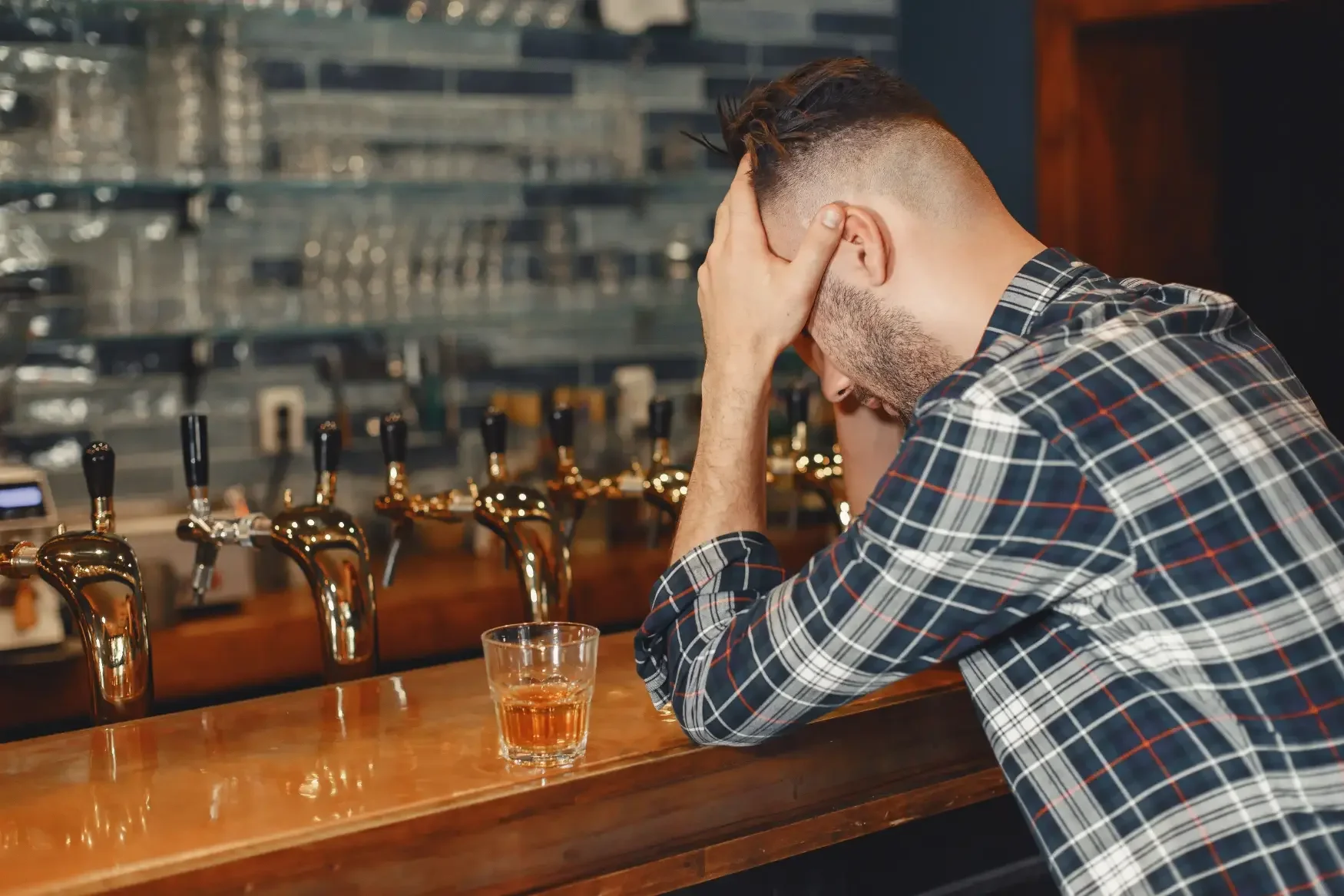
Everything I do as a coach starts with a pause between what happens and how you respond. With shame, that pause sits between the drink and the verdict you would normally hand yourself the next morning.
Catch the Verdict
Notice the sentence your mind produces after you drink more than you planned, and write it down word for word if you can. "I'm pathetic" and "I had four glasses when I meant to have one" are very different statements. Only the second gives you anything to work with.
Trade It for a Question
Swap the verdict for something you can answer. What was happening at six o'clock? What did I want that drink to do for me?
Drinking usually serves a purpose. For one person it eases the switch from work to home; for another it keeps a lonely evening company. Once you can see the purpose, you can start looking for other ways to meet it. Understanding your drinking patterns makes those questions much easier to answer.
Treat a Slip as Information
A slip shows you where your plan met a situation it wasn't ready for. Kelsi Cronkright, who writes about addiction recovery for HealthyPlace, described dropping the language of relapse and day one in favor of something closer to data collection. What pushed her back to the bottle? What needed to change? After about ten years of beating herself up over relapses, she finally cut herself some slack, and eventually her sobriety held.
Start With a Pause
Think of The Pause Assessment as a mirror, a quiet way to notice where you are with alcohol today.
When to Get Medical or Clinical Help First
Letting go of shame helps, but it isn't a treatment plan. Some situations call for a doctor or a licensed professional before anything else.
Physical Dependence
If you drink heavily every day, stopping suddenly can be dangerous. Talk to a doctor before you stop or cut back sharply.
Harm You Can Already See
If drinking is already damaging your health, your work, or your relationships, a doctor or licensed provider is the right first call. Coaching isn't therapy or medical treatment, though it can work alongside either. And if your shame is tied to experiences that still feel overwhelming, a licensed therapist can help you work through them.
Finding Support That Doesn't Run on Shame
Support is most useful when you can bring it your worst days, including the day after a slip. That's what I try to offer.
In one-on-one coaching, we look at your own patterns and the beliefs underneath them, and you set the goals. Nobody hands you someone else's rule. If you'd rather start in company, there's also a free group session on Zoom every other week. You can read more about what I do, or the story of how I became a coach.
FAQs
Why does shame make drinking worse?
Shame is painful, and alcohol numbs it for a while, so the relief can reinforce drinking. After a slip, shame can also turn one drink into a full relapse, a pattern researchers call the abstinence violation effect.
Is shame-free recovery just going easy on yourself?
No. You still take an honest look at what happened and what it cost. The difference is that you judge the behavior rather than your worth as a person. In research, it's shame, rather than guilt, that has been linked to relapse.
What should I do the morning after drinking more than I planned?
Notice the verdict you're handing yourself and swap it for questions about what happened before the drink and what you wanted it to do for you. If you're physically dependent on alcohol, talk to a doctor before cutting back sharply.
Can shame-free recovery work alongside AA or therapy?
Yes. It's a way of treating yourself while you change, and it can sit alongside AA, therapy, coaching, or medical care.
