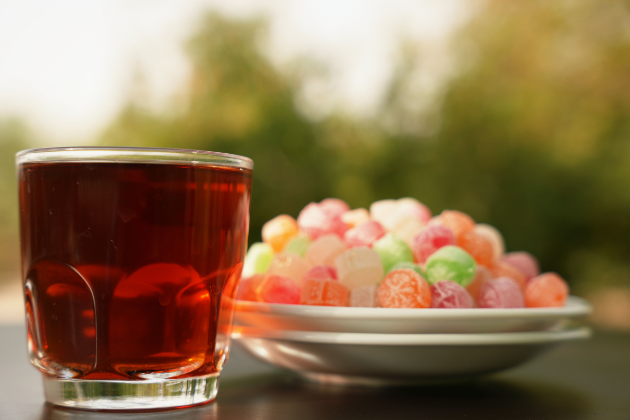
It’s late afternoon. The day has been long.
And there it is again... the pull toward a drink.
Most advice on alcohol cravings treats this moment as a fight to win, something you outlast by gritting your teeth and keeping busy until it gives up.
I’ve come to see that moment differently.
The harder you push a craving away, the more room it seems to take up. Letting it be there for a minute, and simply noticing it, tends to loosen its hold on what you do next.
Why fighting alcohol cravings can backfire
Telling yourself don’t think about the drink sounds sensible. The mind rarely cooperates.
In a 1997 study in Behaviour Research and Therapy, researchers sat frequent social drinkers in front of their usual drink, close enough to see and smell it. One group was told to suppress the urge to drink and the other wasn’t. Afterward, the people who had pushed the urge down were faster to agree with statements about what alcohol does for them.
In other words, trying not to want the drink seemed to bring their beliefs about what drinking does for them closer to the surface. It was a single lab session, and it measured how quickly people answered, not how much they drank.
If you’ve tried discipline and rules and keep ending up in the same place, this may be part of the reason.
How to ride out an alcohol craving when it hits
Riding out a craving starts with noticing it. In practice, that’s a few small things you can do while the craving is still there, and none of them involve beating it.
Naming it
Say it plainly, even silently. This is a craving.
It may feel a little silly the first few times. What it changes is the sentence in your head, from I need a drink to I’m having a craving.
From there, you might notice where it sits in your body. Maybe a tight chest, or hands that can’t stay still. You don’t have to change anything you find.
Let it crest
The National Institute on Alcohol Abuse and Alcoholism (NIAAA) suggests a skill it calls riding out an urge. Accept the urge as normal and temporary, and it “will soon crest like an ocean wave and pass.”
NIAAA calls urges short-lived and says they lose strength with time and practice.
Ask what it wants
Once the wave has passed, think back to what that drink was going to be for. Maybe it was relief. Maybe it was a line between the workday and the evening.
For years I thought alcohol itself was the problem. In the end, the work was with the beliefs underneath it.
When noticing becomes a fight
Some days you’ll think you’re pausing when you’re only holding on. You’re watching the clock, jaw tight, waiting for the craving to hurry up and go.
If you catch yourself there, stop checking the time. Let the craving take as long as it takes.
Does urge surfing work for alcohol cravings?
Partly, and the part it leaves out matters. Urge surfing means noticing an urge and riding it instead of fighting it. The research suggests it changes what you do with a craving more than how strong the craving feels.
In a 2009 study of college smokers, the group that learned urge surfing had urges no weaker than the comparison group’s. Over the next week, though, they smoked significantly fewer cigarettes.
The craving stayed. It just stopped making the decision.
That study was about cigarettes. The drinking research I could find is smaller, but it points the same way. In a study of 50 college drinkers, those who were more accepting of their present experience showed a weaker link between their automatic pull toward alcohol and hazardous drinking.
A larger clinical trial published in 2014 followed 286 people after treatment for substance use. At six months, both relapse prevention approaches (one standard, one built on mindfulness) had cut the risk of heavy drinking compared with usual aftercare. A year on, the mindfulness group was more likely than the standard group to have avoided heavy drinking altogether.
When to get help for alcohol cravings
Some cravings need more than a pause. You deserve to know which ones before you lean on this approach.
Physical dependence
Some cravings come from withdrawal. According to MedlinePlus, the more often you drink, the more likely withdrawal symptoms become when you stop, and withdrawal “may quickly become life-threatening.”
If that could be you, please talk to a doctor before you stop or cut back sharply. Noticing doesn’t replace medical care, and coaching doesn’t either.
Urges that don’t ease
NIAAA suggests seeing a healthcare professional if urges stay very hard to handle, or if you see no progress after a few weeks.
Getting support when cravings keep coming back
If cravings keep coming back, it can help to talk them through with someone.
The pause assessment is a free self-reflection tool on this site. If you’re not sure yet what you want to change, that’s where I’d start.
If you drink more than you’d like but don’t think of yourself as having a drinking problem, I also offer gray area drinking coaching.
In one-on-one coaching, we talk through the beliefs behind your drinking.
