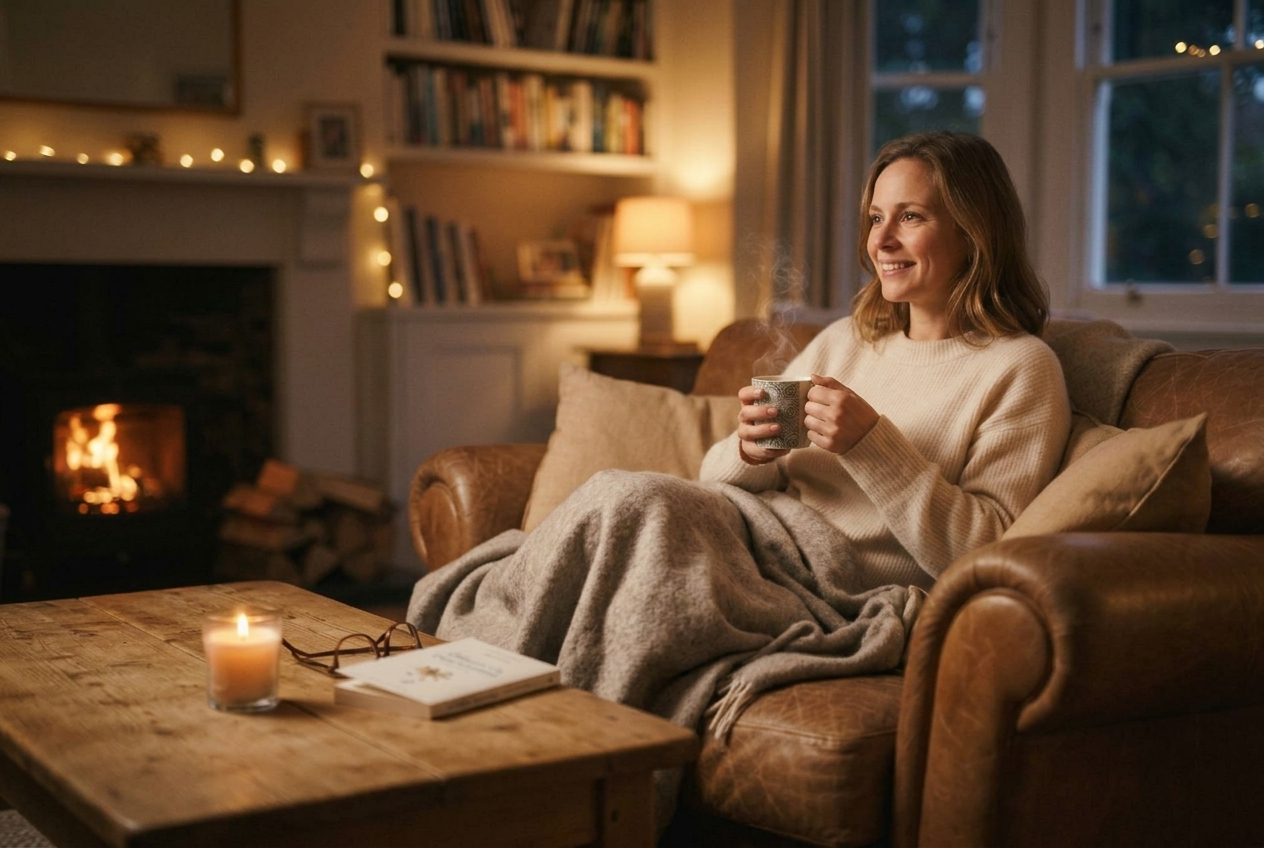
It's a little after seven. Work is done, dinner is going, and a glass of wine is already in your hand before you've really decided anything. Nothing about it feels dramatic. It's just what evenings look like now, and that ordinariness is exactly what makes nightly drinking so hard to change.
You can break a nightly drinking habit without white-knuckling your way through every evening. The drink is attached to a moment in your day, so the work is to find that moment, give it a new routine, and repeat the new version until it feels normal. If you drink heavily every day, see a doctor first, because stopping suddenly can be dangerous.
Is Nightly Drinking Really a Problem?
No single number turns a habit into a problem. The pattern tells you more: how much you drink, how often, and what the drink is doing for you.
Plenty of people who pour a glass every night wouldn't describe themselves as having a drinking problem. They still notice that alcohol takes up more of their evenings, thoughts, and mornings than they'd like. Some coaches call this middle ground gray area drinking. It's an informal description rather than a diagnosis, and it doesn't rule out alcohol use disorder.
The daily rhythm is part of the concern. Drinking every night means your body rarely gets a break, and over time tolerance can build, so the same glass may start to do less. You don't need a diagnosis to decide that isn't the pattern you want.
Why the Evening Drink Turns Into a Habit
For many nightly drinkers, the taste is only part of it. The drink often sits inside a routine, and the routine can do much of the deciding. Seeing how it's built makes it much easier to take apart.
The Cue Comes First
Habits run on cues, and for nightly drinking the cue is usually a time and a place. It might be walking through the front door, starting dinner, or sitting down once the kids are asleep. After enough repetitions, the cue alone switches on the urge before you've made any choice at all.
The Drink Has a Job
A nightly drink often serves a purpose. It might mark the end of the workday, take the edge off stress, fill a quiet house, or feel like a small reward for getting through. If the drink goes but that need stays, finding something else to meet it can make the change easier to keep.
Repetition Makes It Automatic
A 2010 study from University College London followed 96 volunteers for 12 weeks as they tried to make a simple daily behavior automatic, such as eating fruit with lunch or going for a run. For participants whose data fit the model well, the estimated median time to become close to fully automatic was 66 days, with estimates ranging from 18 to 254 days.
The study didn't look at alcohol, but it does show that new routines take time to settle and that the time varies a lot from person to person. If you've leaned on willpower alone before and it hasn't held, building a new routine may be a better place to put your effort.
Read More: Why Is It So Hard to Stop Drinking Alcohol, Even When You Want To?
What Nightly Drinking Does to Sleep and Health
Alcohol can affect your sleep the same night you drink. Regular drinking also carries longer-term health risks, including cancer.
The 3 a.m. Wake-Up
Alcohol can help you fall asleep faster, which is why a nightcap can seem to work. Sleep research shows it tends to deepen sleep in the first half of the night and disrupt the second half. A 2013 review of 20 sleep lab studies found that moderate and higher amounts also reduced total REM sleep, the stage linked to dreaming and memory. If you often wake in the early hours, alcohol may be one of the things contributing.
Risk That Builds Over Years
Alcohol is the third leading preventable cause of cancer in the US, after tobacco and obesity, according to the 2025 Surgeon General's advisory. It raises the risk of at least seven cancers, and the risk climbs with how much you drink over time, whether it's wine, beer, or spirits. For breast, mouth, and throat cancers, the advisory notes that risk may begin to rise at around one drink a day or less.
Signs It May Be More Than a Habit
Only you can answer these, and nobody needs to see your answers. Treat them as questions to sit with rather than a test you pass or fail.
Has one drink quietly turned into two or three?
Do you feel restless or short-tempered on evenings without it?
Do you plan your evening around when you can pour the first glass?
Do you drink faster, or more, after a hard day?
Do your alcohol-free nights tend to last only a day or two?
Do you play down how much you drink when someone asks?
A few yeses don't mean something is wrong with you. They mean the habit deserves a closer look, and the pause assessment is a free self-reflection tool you can start with. It isn't a medical screening, so it doesn't replace a conversation with a doctor. If you get shaky, sweaty, or sick when you go without a drink, speak to a doctor before you change anything.
How to Break the Nightly Drinking Habit

These strategies work on the routine around the drink, since that's where the habit lives. Start with one or two that fit your evenings. Trying all of them at once can be a lot to manage.
Before you start, a quick safety check. If you drink heavily every day, or you feel shaky, sweaty, anxious, or sick when you cut down, talk to a doctor before you plan alcohol-free nights or a longer break. Seizures, hallucinations, or confusion after cutting back are serious withdrawal signs and need urgent medical help.
Map Your Drinking Moment
Spend a week paying close attention to your evenings. Note when you first think about a drink, where you are, how you feel, and how much you end up drinking. There's no need to hold off on other changes while you do this. You may find the urge shows up at a similar point most evenings, and that moment is where the rest of this list can be aimed.
Swap the Ritual, Keep the Moment
If the drink marks the end of the day, the day still needs an ending. Keep the moment and change what fills it: a shower and a change of clothes, a walk around the block, or sparkling water with lime in the glass you'd normally use. Choose your replacement before the evening starts. Having it planned makes the choice easier when the urge arrives.
Move the First Drink Later
On nights you do drink, push the first one back. Pour after dinner instead of while you cook, or wait an hour after getting home. Waiting gives you a chance to try another activity and notice whether the urge changes.
Start With Your Easiest Nights
Not every evening pulls the same way. Look back at your notes and find the nights when the habit feels weakest for you. Make two or three of those alcohol-free first, and let those wins build the confidence for harder ones.
Write an If-Then Plan
Psychologists call these implementation intentions, a plan written as "if this happens, I'll do that." If I walk in stressed, I'll change and step outside for ten minutes. If friends suggest drinks, I'll order a soda with lime. Deciding ahead of time means you're not working it out in the moment. When an urge hits anyway, there are ways to deal with alcohol cravings that don't involve gritting your teeth.
Bring Your Household In
A habit is harder to shift alone, especially if your partner pours at the same time every night. Tell the people you live with what you're trying to do and what would actually help, whether that's not offering you a glass or coming along on an evening walk. They don't have to quit with you.
Try a Month Without Alcohol
A month without alcohol can show you what your evenings look like when it isn't part of them. University of Sussex researchers surveyed people who signed up for Dry January 2018 and followed up with more than 800 of them that August. By then, respondents reported about one extra alcohol-free day a week. Separately, 71% reported sleeping better during Dry January. The findings are self-reported and come from people who chose to take part, so the results may not reflect what everyone would experience. The safety check above matters most here.
Plan for the Night That Goes Sideways
Some evenings you'll drink when you meant not to. Treat it as information rather than failure: look at what happened just before, adjust the plan, and pick it up again the next night.
What to Expect When You Cut Back
Changing a nightly routine affects people differently. It helps to know the difference between an evening that feels unfamiliar and a body that's reacting to less alcohol.
There's no set timeline for how this feels. For some people the hardest part is that evenings feel long or empty without the usual drink. Feeling physically unwell is a different matter. Trouble sleeping, anxiety, sweating, shaking, or nausea after you cut down can be signs of alcohol withdrawal, and they're a reason to talk to a doctor rather than push through.
For many people a new routine gets easier with repetition, though the pace varies. Keep noting how your evenings, sleep, and mornings feel, so you can see what's changing and adjust the plan when something isn't working.
When to Get Extra Support
Some people change a nightly habit on their own. Others find it easier with support, and you don't need to wait until things feel serious to ask for it.
Medical care comes first if you drink heavily every day or feel unwell when you skip a drink. A doctor can help you cut back safely and talk through whether medication makes sense for you. You can also see a doctor if you're simply worried about how much you drink.
Coaching offers a different kind of support, built around your routines, goals, and accountability. Gray area drinking coaching with Cheryl Young looks at what the evening drink is doing for you and the beliefs that keep it in place, then helps you build evenings that don't lean on it. Coaching isn't therapy or medical treatment, and it can run alongside either.
Prefer to start in a group? Cheryl also hosts a free bi-weekly group zoom, held twice a month, where people talk honestly about drinking and change without being judged or told what to do.
Read More: Alcohol Recovery Coaching vs. AA: What's the Difference?
Start With One Evening

You don't have to fix every night at once. Pick one evening this week, decide in advance what will fill the moment you'd usually pour, and notice how it goes. If you'd like to look at your own pattern before changing anything, the pause assessment is one place to start.
